
Youth Without God
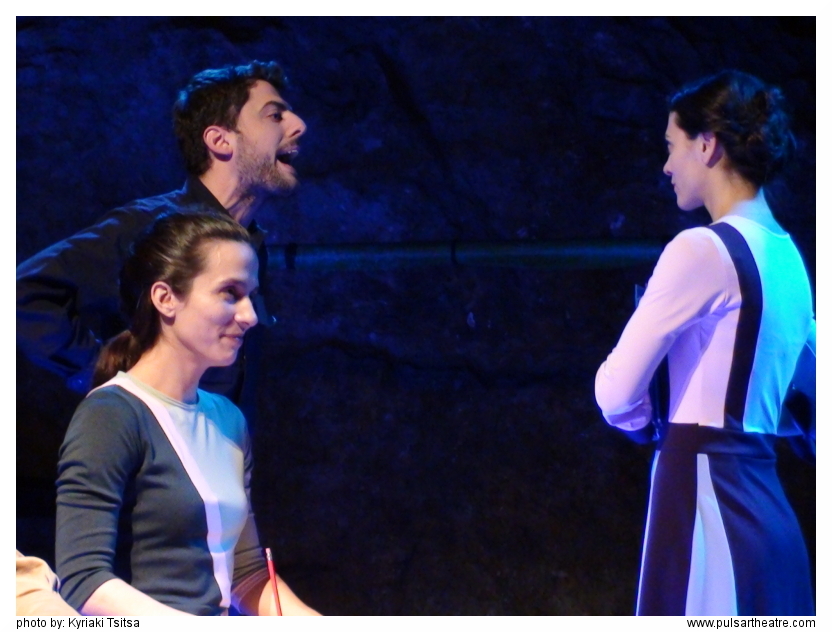
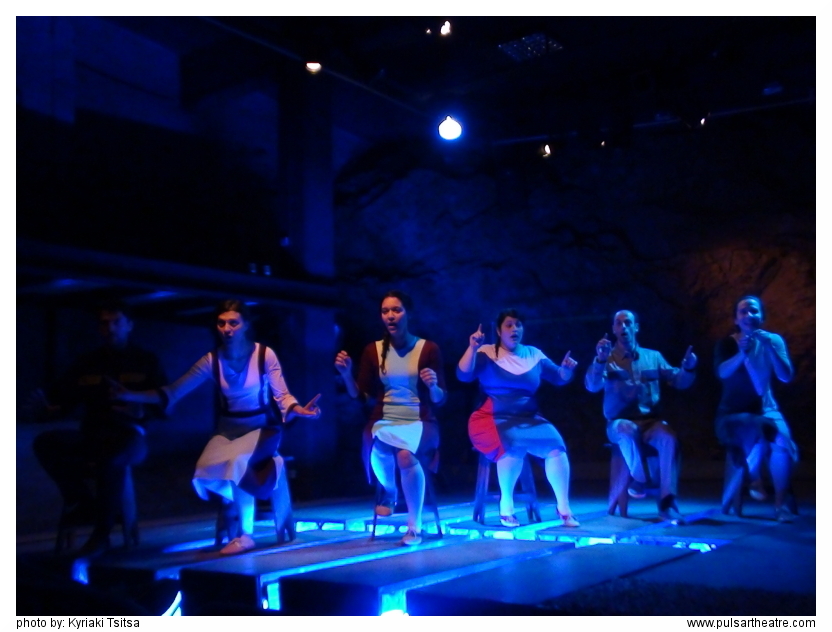
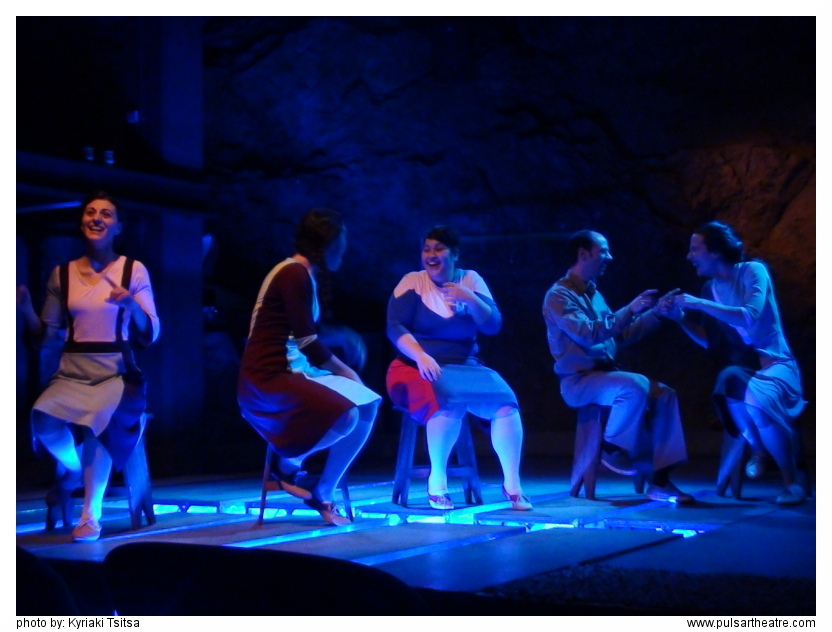
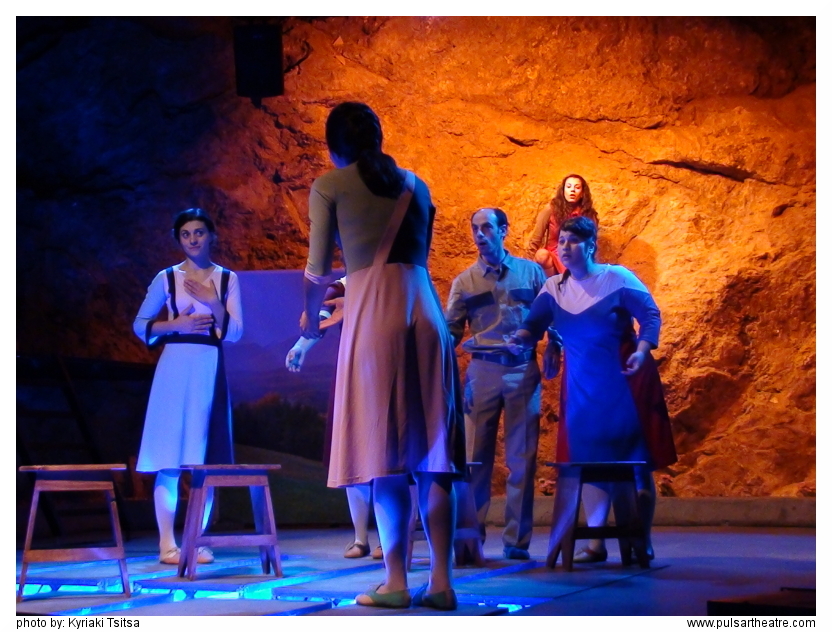
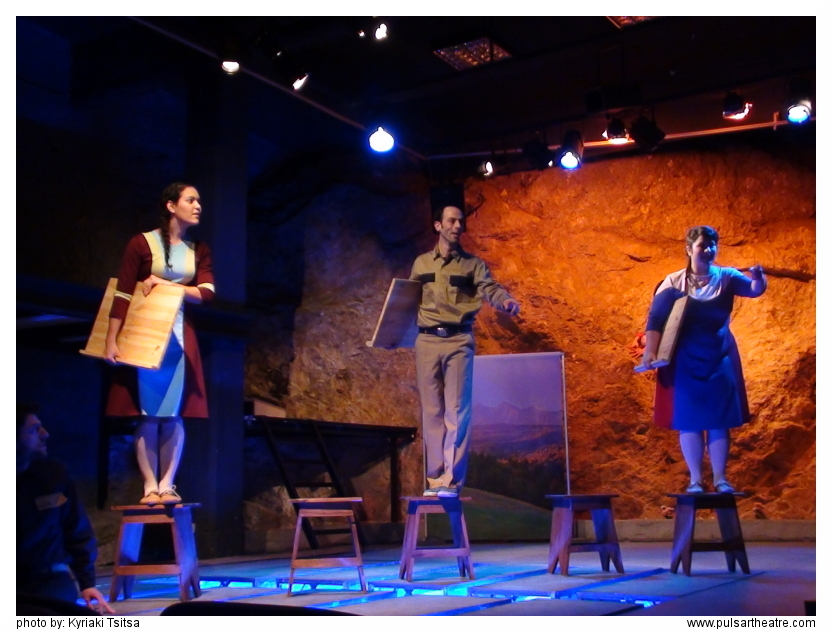
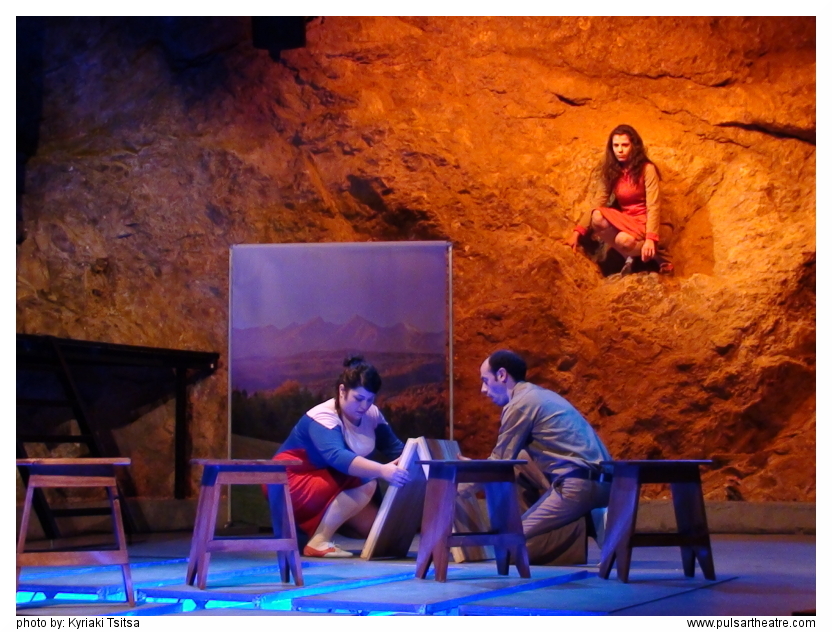
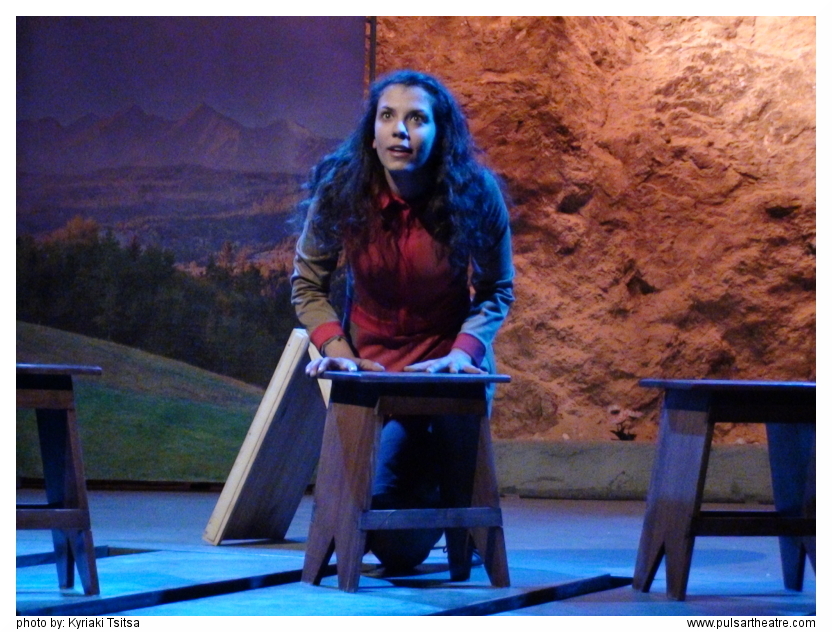
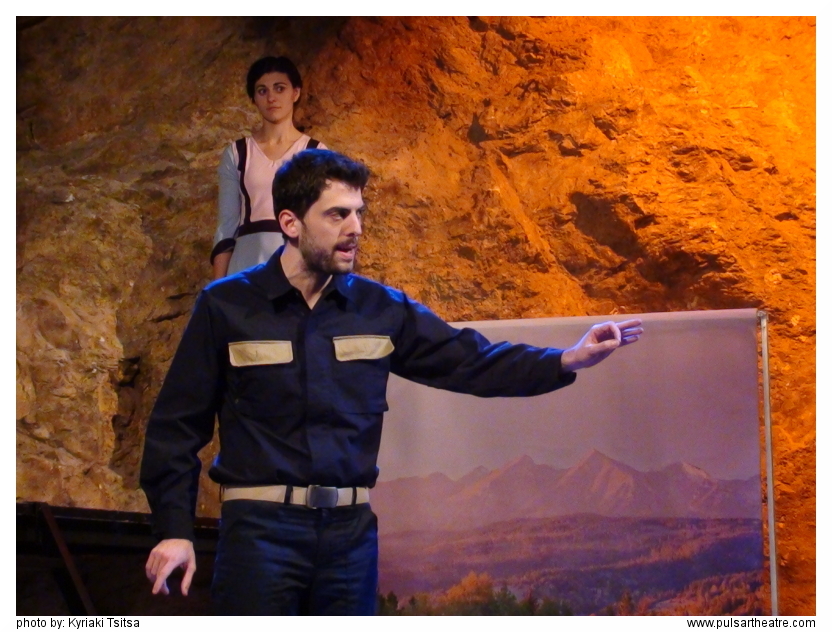
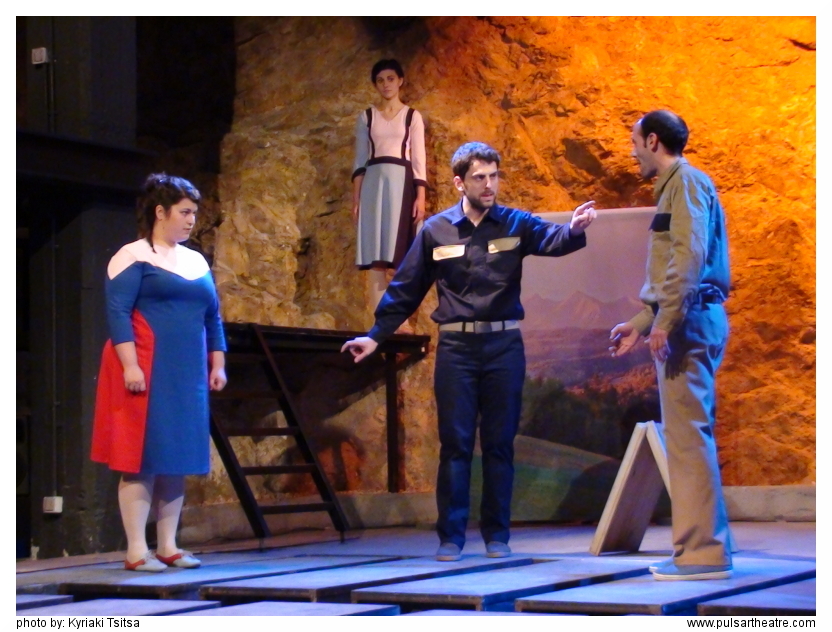
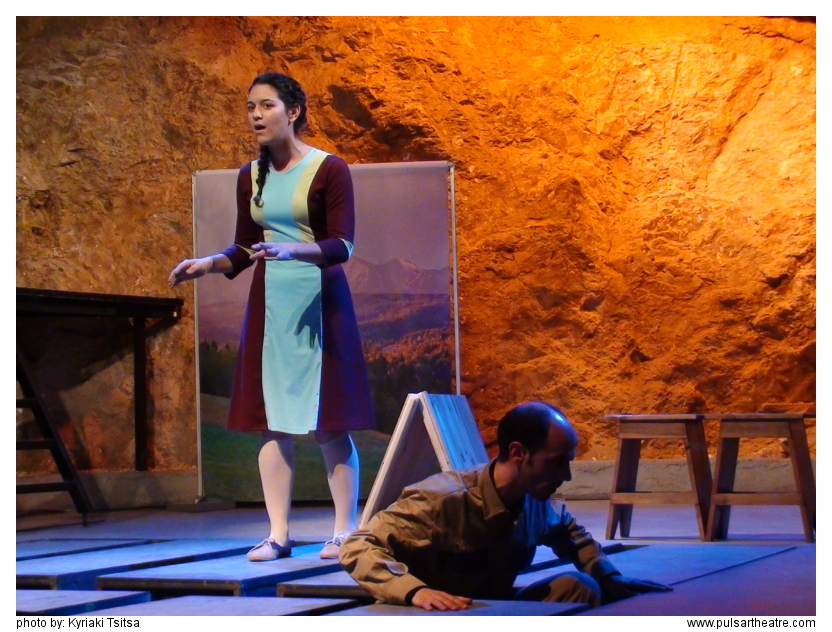
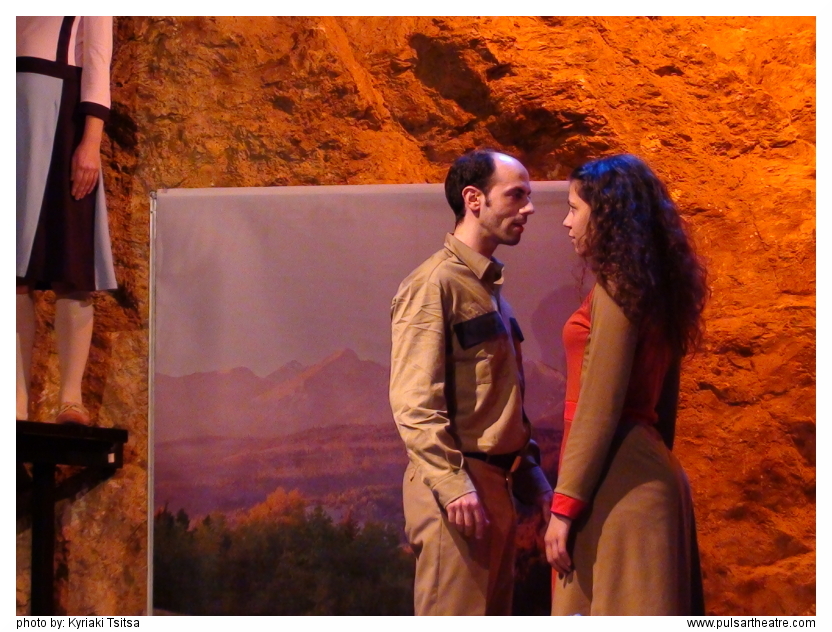
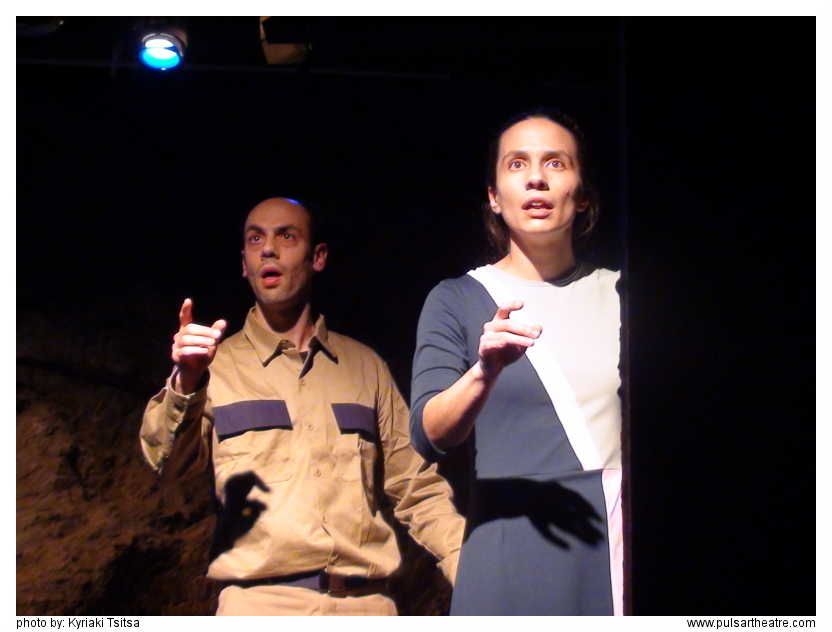
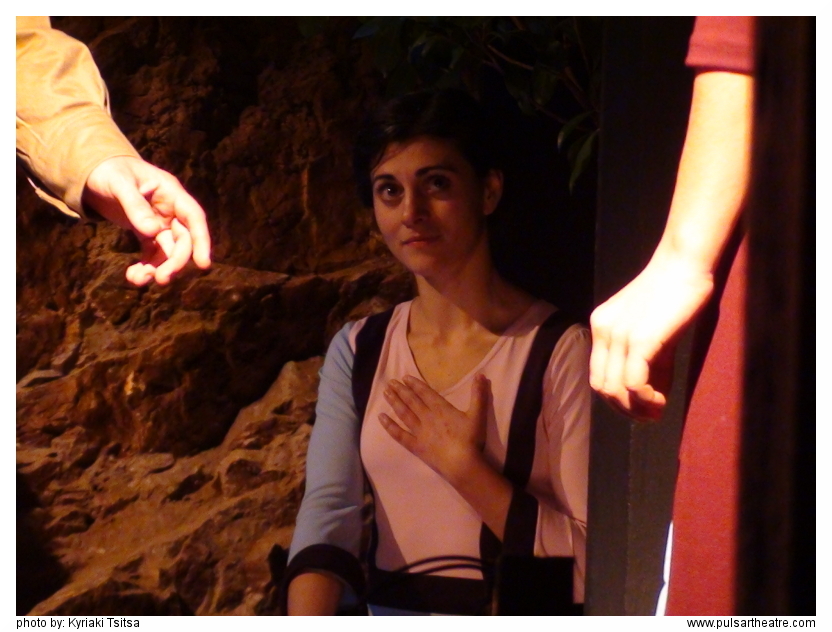
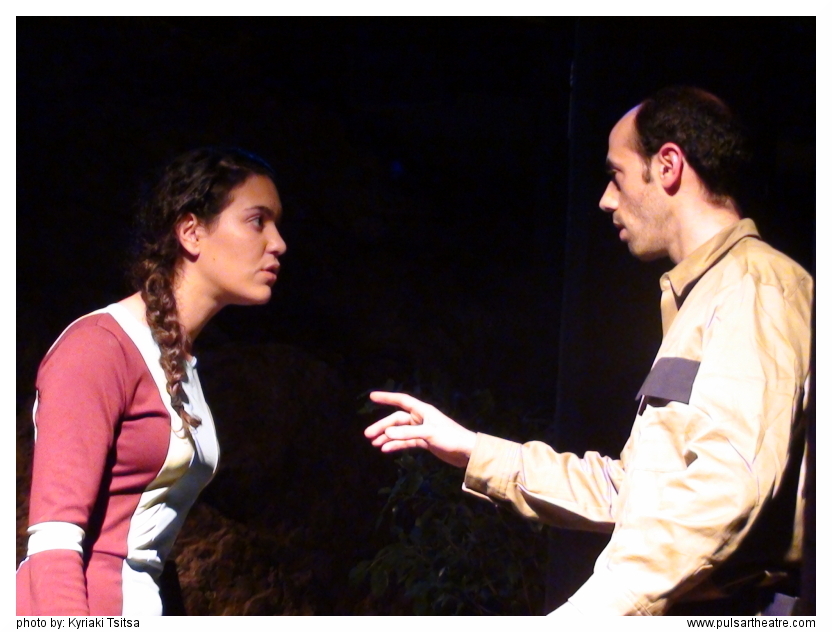
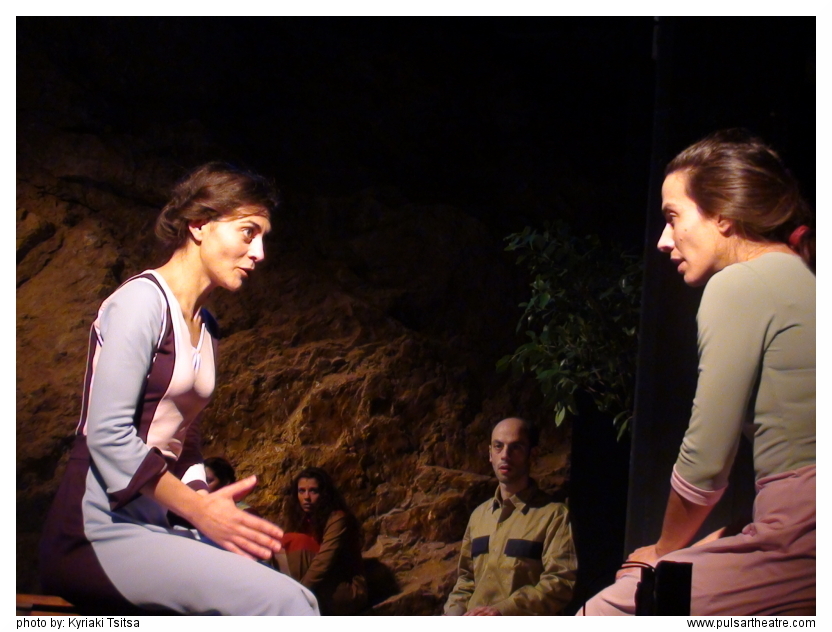
Pulsar group presented Ödön von Horváth’s work Youth Without God, at Skrow Theater, in Athens, from 5 February until 10 April 2014.
Translation: Vicky Georgiadou, Foibi Psevdou
Director, dramaturgy: Vicky Georgiadou
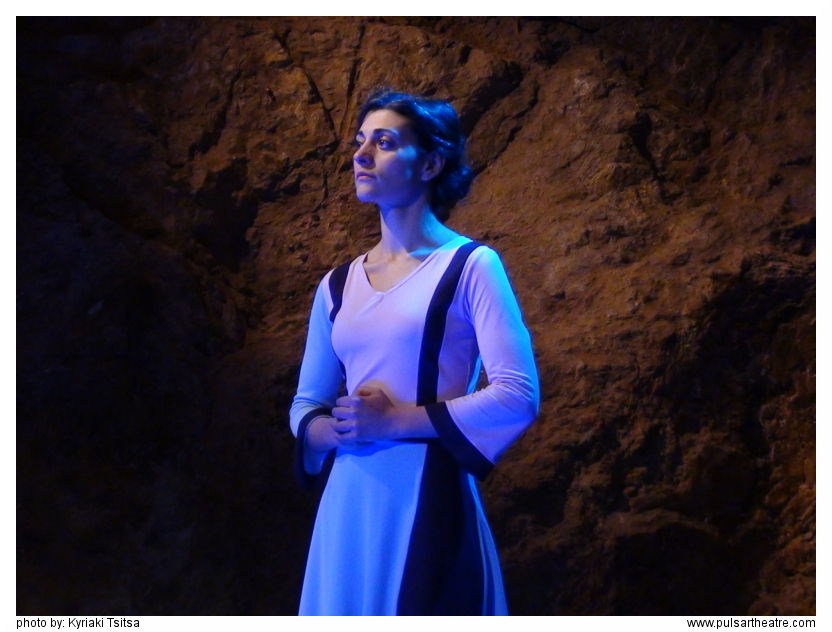
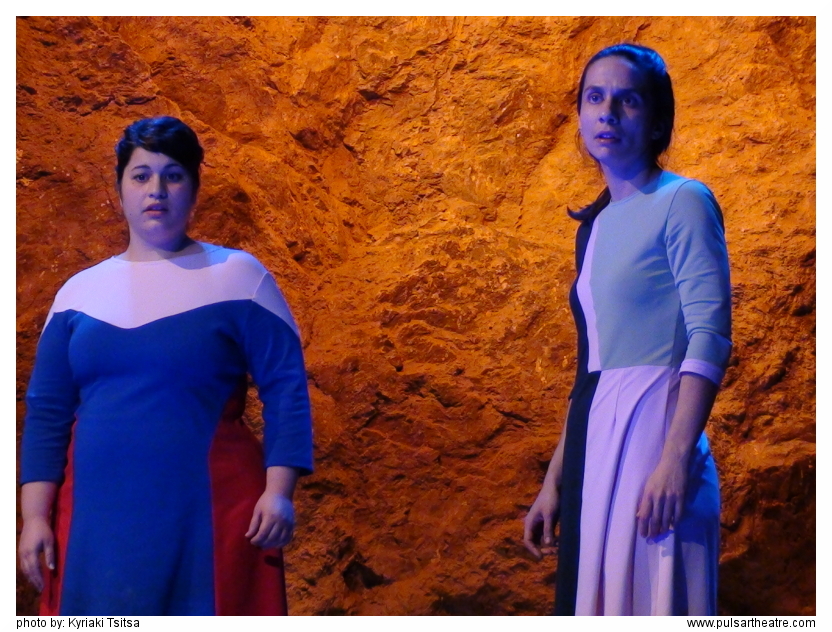
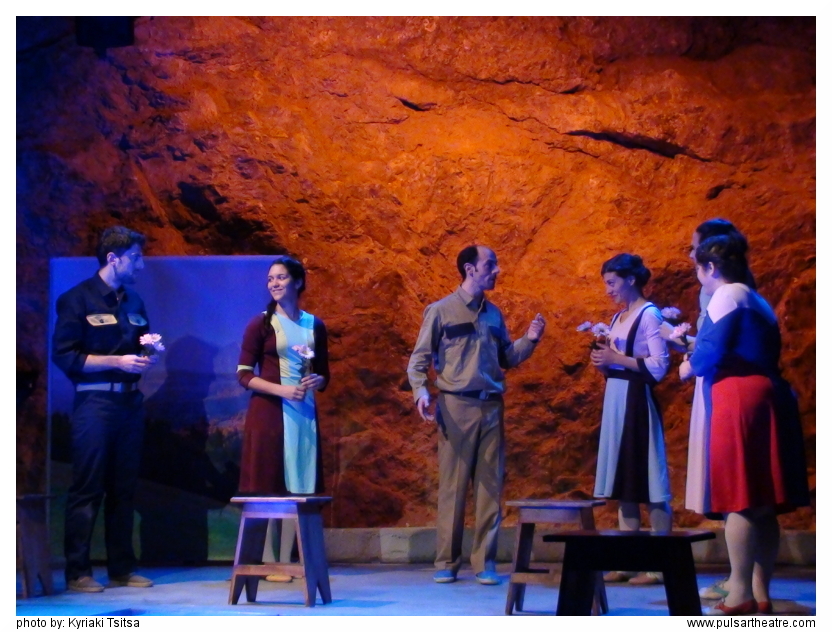
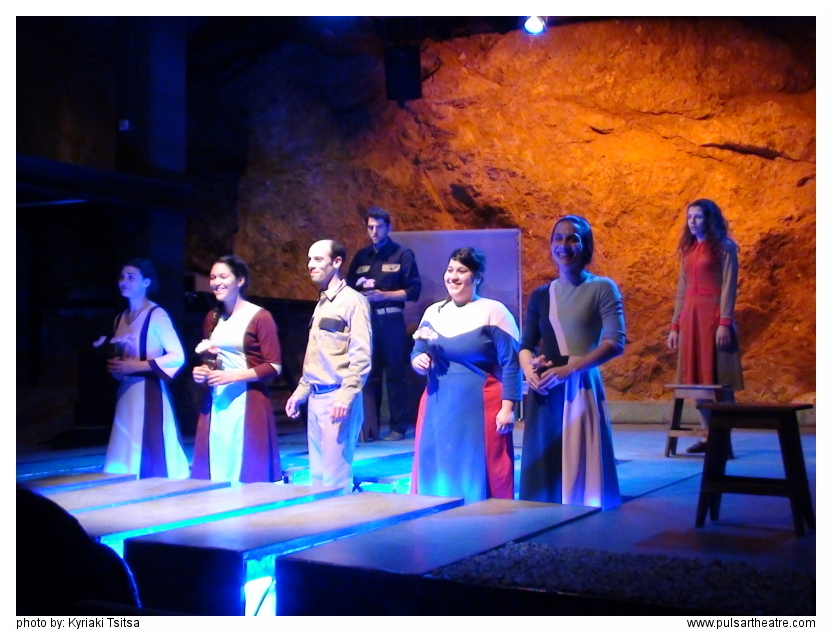
Set/costume design: Kyriaki Tsitsa
Lighting designer: Melina Mascha
Music and sound design: Costas Andreou
Production: Pulsar group
Cast:
Teacher 1 / Abbess / President / Mother T: Genovefa Zagga
R / Teacher 2 / Mother X: Athanasia Agoraki
E / Teacher 3 / Advocate / B: Yiouli karnachoriti
N / Teacher 4: Voula Verdeli
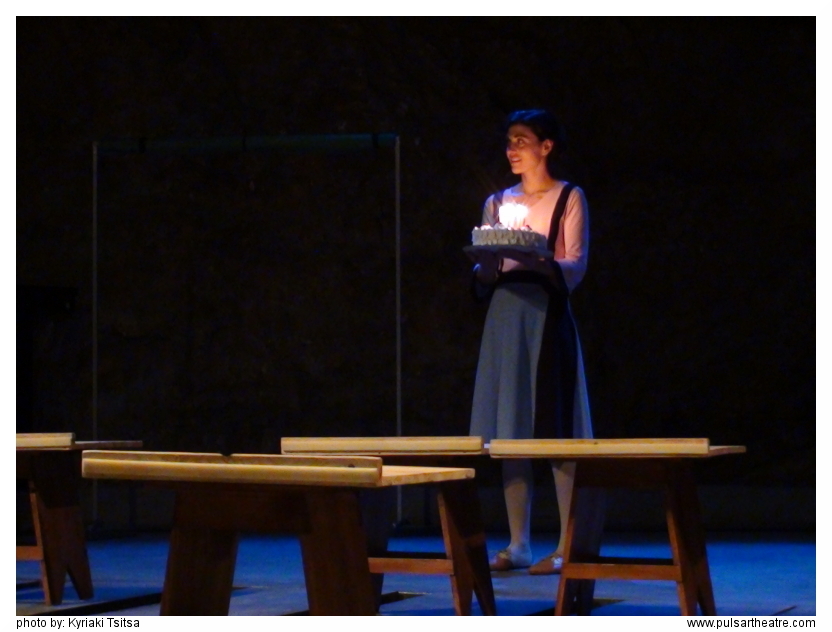
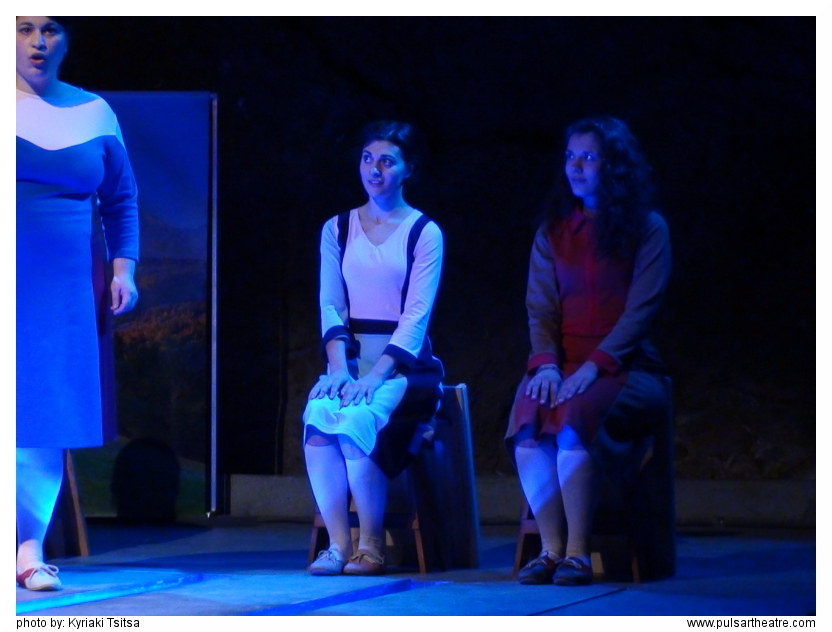
Schoolmistress / Eve: Danai Tikou
D / Baker N / Teacher 5 / T: Pantelis Flatsousis
B / X / Teacher 6: Foivos Simeonidis
The antibodies of truth
A country retreated in the castle of dictatorship. Governed by the Great Plebeian. The radio stammers lies. The state issues secret circulars, which boost the new patriotism and intensify the division among people, which prepare the youth for war and set the rules of a game which people are forced to play without having chosen it.
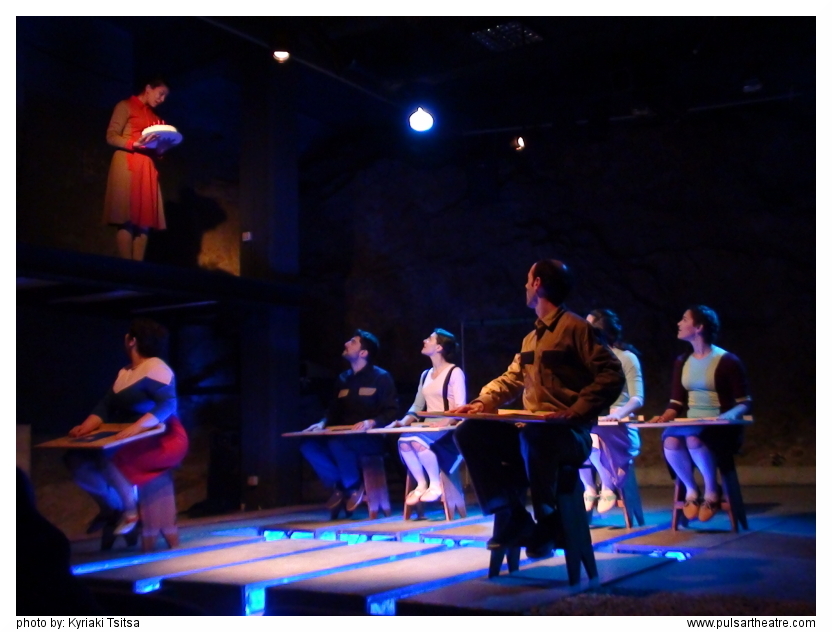
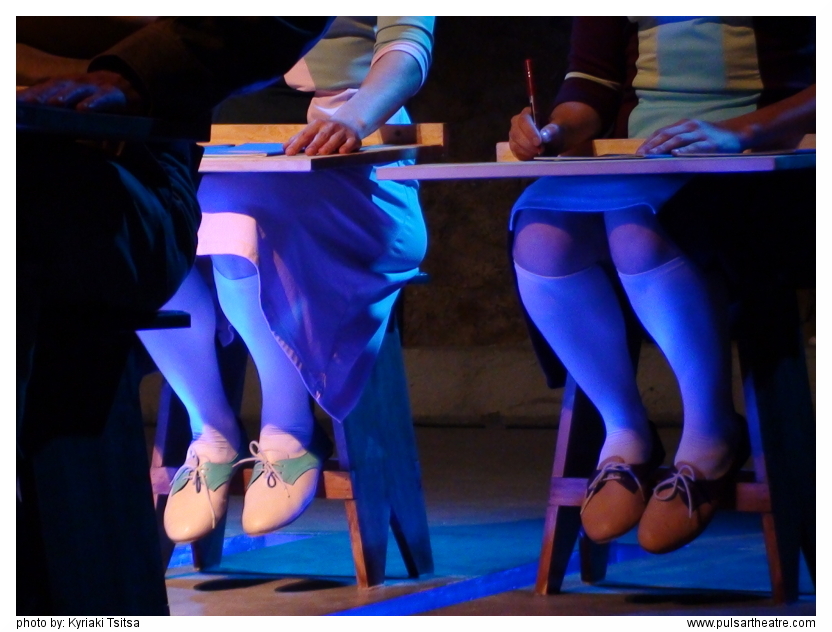
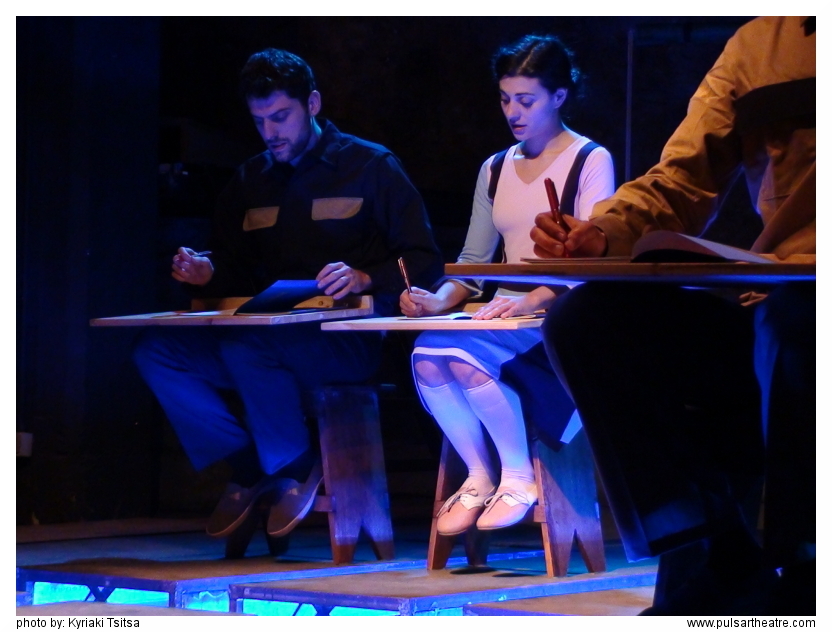
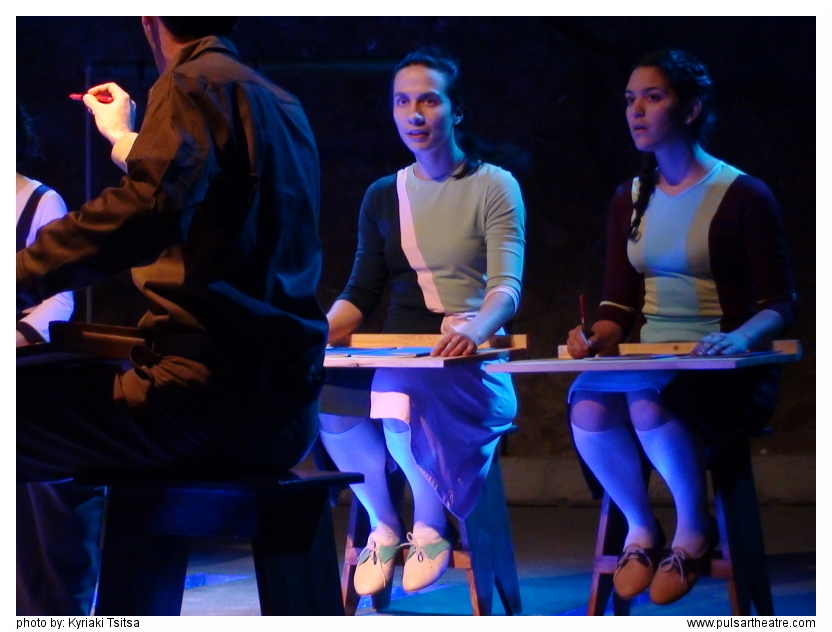
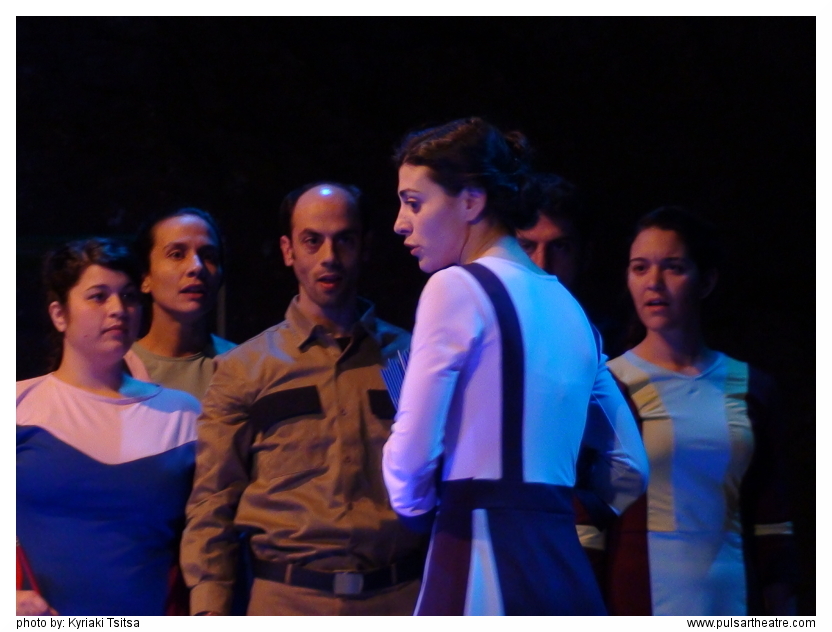
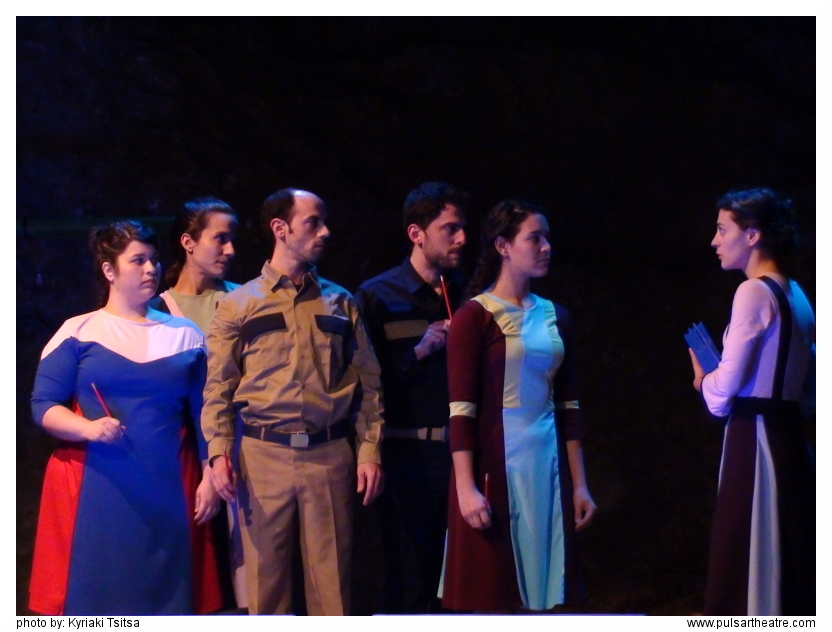
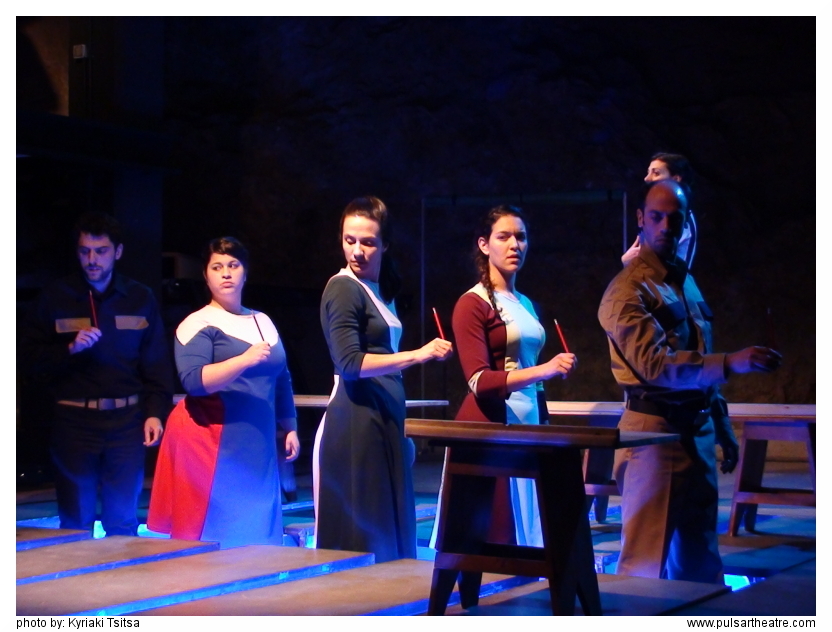
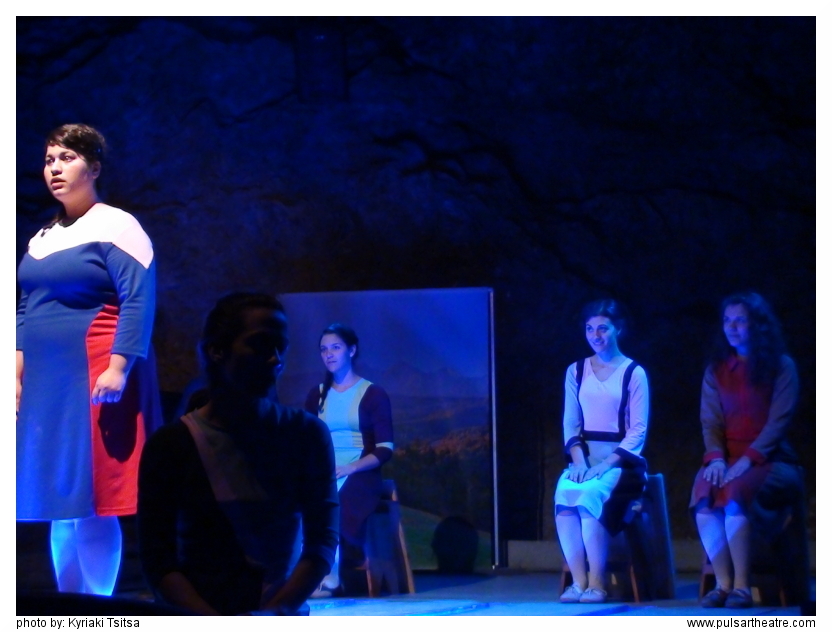
A school, in which students are letters, with no names. They write compositions parroting nationalistic commands. Their ideal is sarcasm. Their opponent is the thought process. Their weapon is aphasia. They have an empty look and blank souls. This is their armor at the threshold of a war, later called World War II.
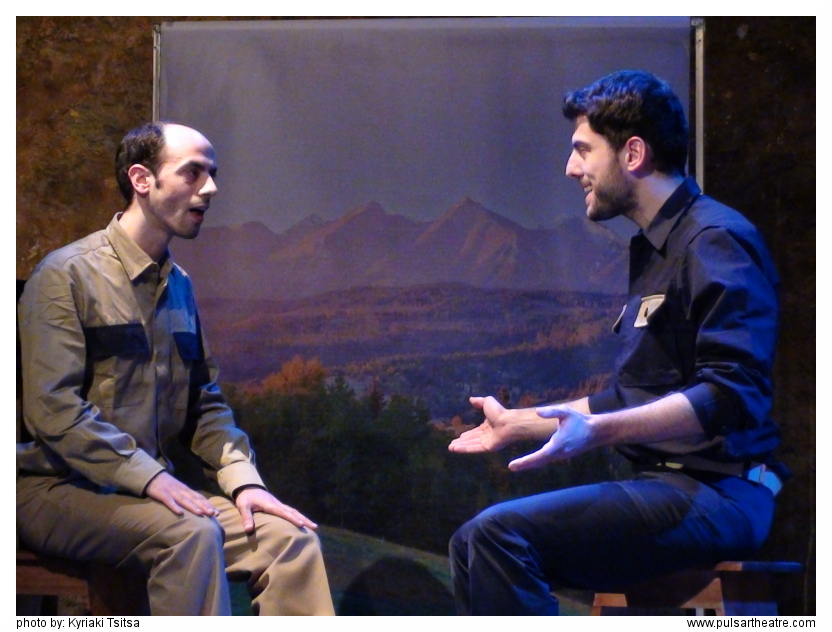
A teacher who, when he was at his students’ age, found himself into the vortex of a war, later called World War I. He couldn’t conceive how God could tolerate such a horror. He left his faith behind and became a man without God. Now he teaches today’s youth without God on the earth of God which became the tomb of men. And he adjusts to his era. He dresses his cowardice in the cloak of higher ideals, he follows the rules in order to avoid disciplinary delinquencies, he has enough money to provide himself with some bread and a cheap drink and he preserves his job to keep alive the hope of a pension in a miserable future.
The students will become adults and the teacher will grow old in a world where a plague infects and ultimately kills off people’s souls. Humans die, steeped into uncertainty and opportunism, into the hypocrisy of believing in higher ideals and the absurdity of revolutionary decadence, into the coldness of the age of the fish.
Europe between the two World Wars or at the threshold of 21st century: humans transformed in fishes swim in a world where any other characteristic apart from obedience is intolerable. In times like these, according to Horváth, truth always goes and lies come.
Yet, Youth Without God is not the dark vision of a lost world. Horváth, desperately and silently full of hope, seeks to find God again. Not a God who offers the consolation of faith, but a God who is identified with the truth.
Youth Without God is a story which, against all odds, deals with the regaining of our relationship with God through the reconquest of truth.
Throughout this story, truth is concealed, truth peeps out of the dark waters of guilt, truth springs from hidden seeds which had fallen unconsciously on the field of lies, truth breaks free and speaks, sets people free and reminds them of their humanity, it gives back to the eyes of the fish sparkle and light, it overcomes shame and reminds people what dignity is.
Horváth writes to justify the moment of life that is condemned in his title. The young people of this novel seem to have antibodies to the soul plague, seem to have secret hopes and dreams, although these are concepts that have been excluded from their vocabulary, they seem to have an invincible curiosity to discover how things should be, the moment that it is imposed to them that this is the only way things could and must be, they have a reckless power which the adults call naivety, because they are ashamed of their own resignation.
The fishes without God turn into humans with hope says Horváth and smiles warmly in 1937, a year before his sudden death.
Youth Without God, a novel that was meant to become Horváth’s literary will. A work that bequeathed to the youth the inalienable right to hope, which many times the circles of human history struggle to remove.
The age of the fish
A school – in which students are taught the ideals of the race instead of the ideals of humanity and how to gibe instead of dreaming – has to follow the decree of a dictatorial state.
The students will go camping. Under the supervision of retired military, they will learn how to march, how to advance and face virtual enemies, how to open trenches and graves and how to shoot live ammunitions at wooden soldiers with hostile uniforms.
The camp is in the mountains, in the free nature. Next to a village that has many unemployed workers and malnourished children, because the sawmill of the area stopped sawing for “efficiency reasons”. And next to some caves which are the home of a a a gang of fourteen years old children who steal dread from blind old women and small things from the camp from the wealthy plebeians offsprings.
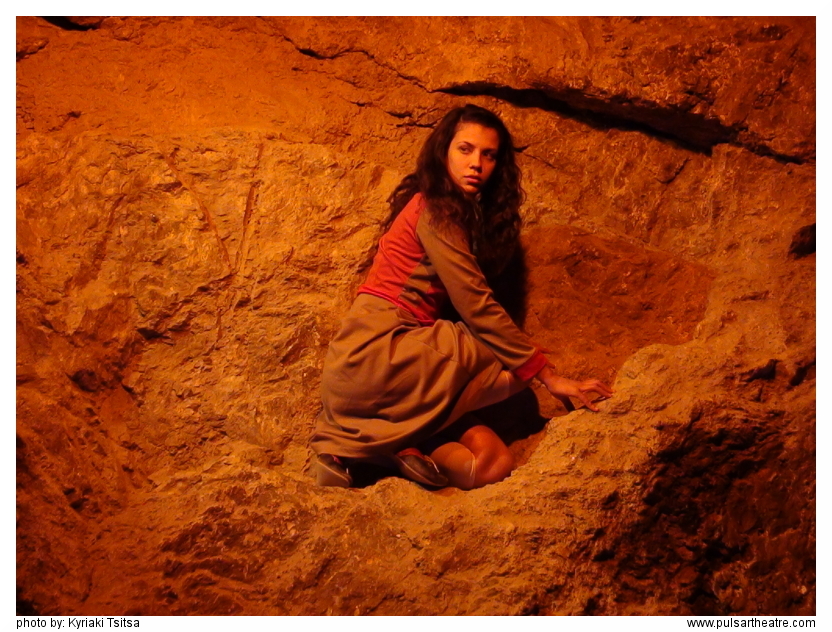
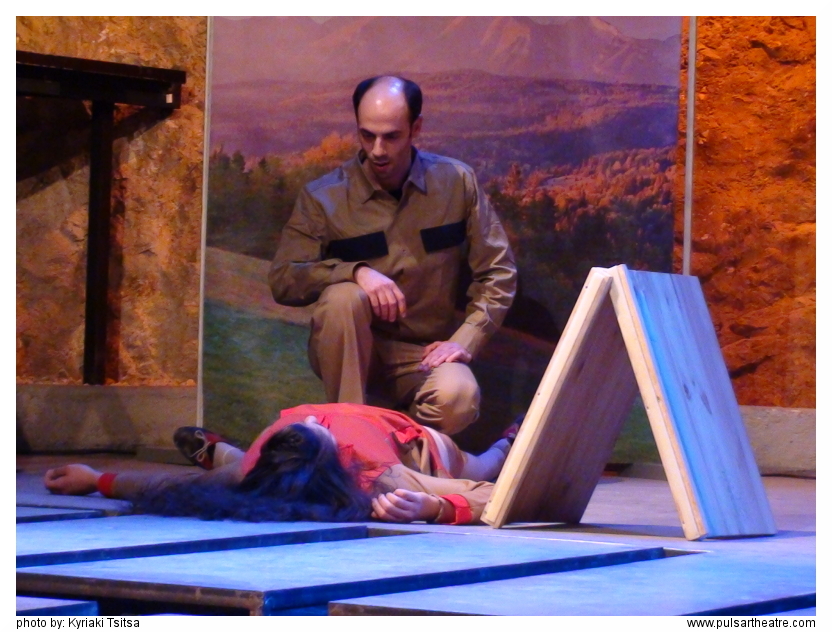
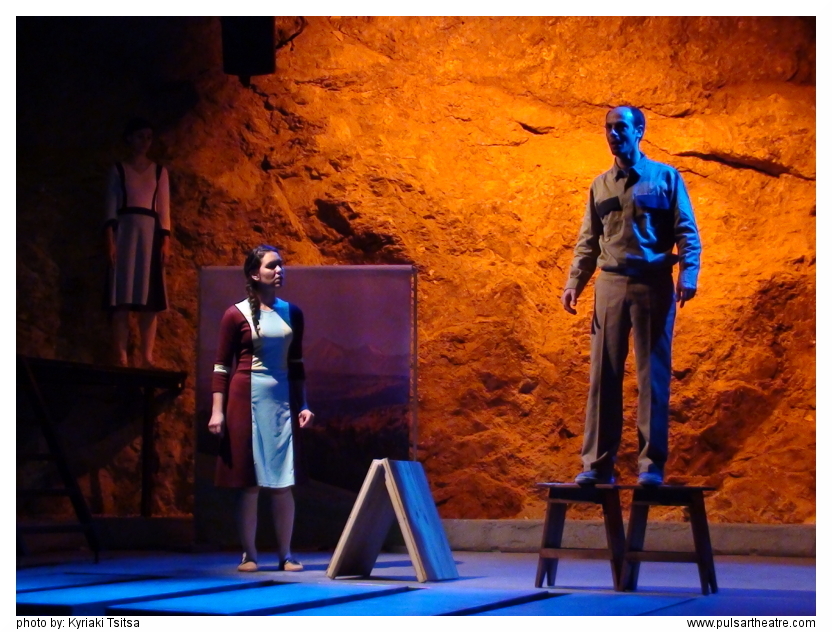
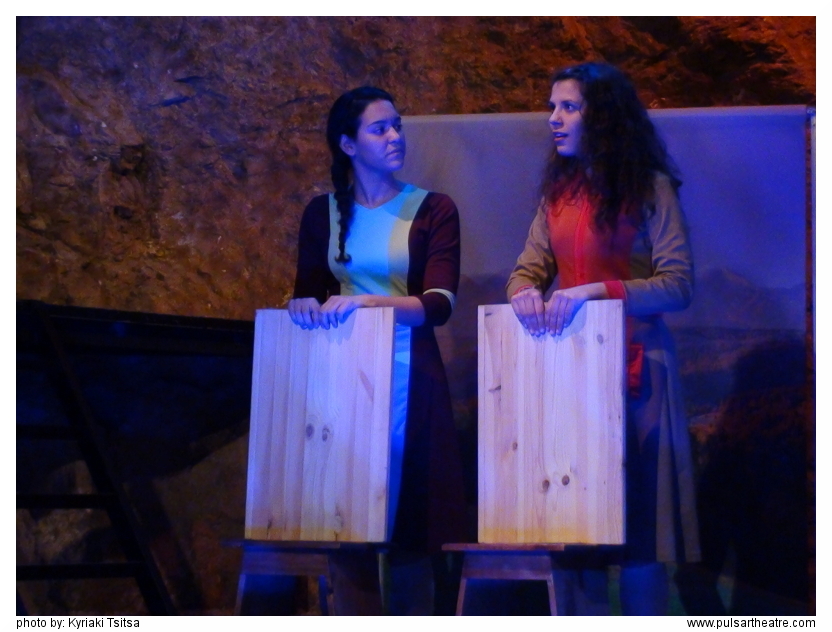
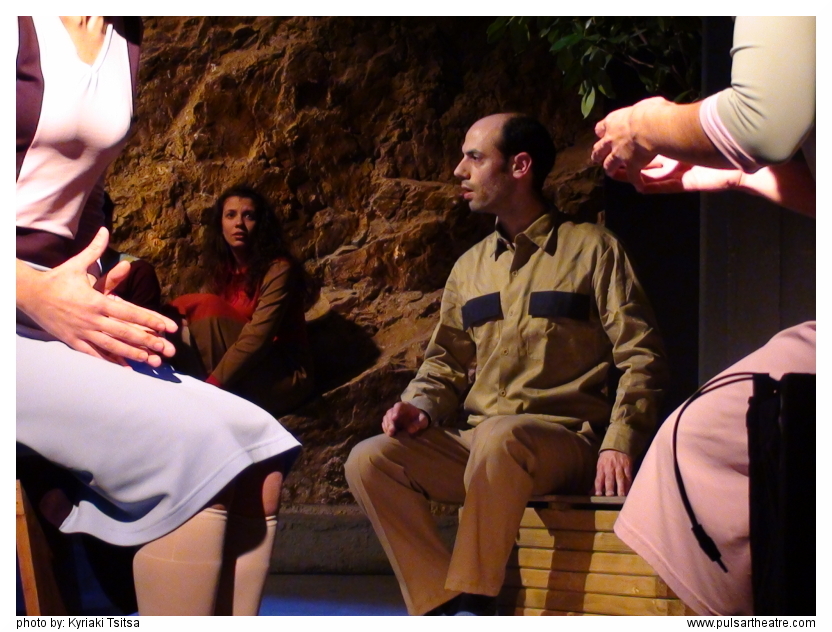
And the teacher – who teaches History and Geography, who tries to find words to explain to his students the square stories of the round earth, who has forgotten why he loves his profession – will see these different children meeting each other. Adam of the children who learn how to shoot will be lost in the forest and Eve of the children who steal will show him the way back to the camp. The teacher will not see this meeting. But he will see Adam X receiving a letter for Eve. What does the letter say?
To read the letter will become an obsession for him. Student X keeps the letter locked in a box. Along with his diary. In his diary he writes his innermost thoughts and student N, who shares the tent with him, is furious about it.
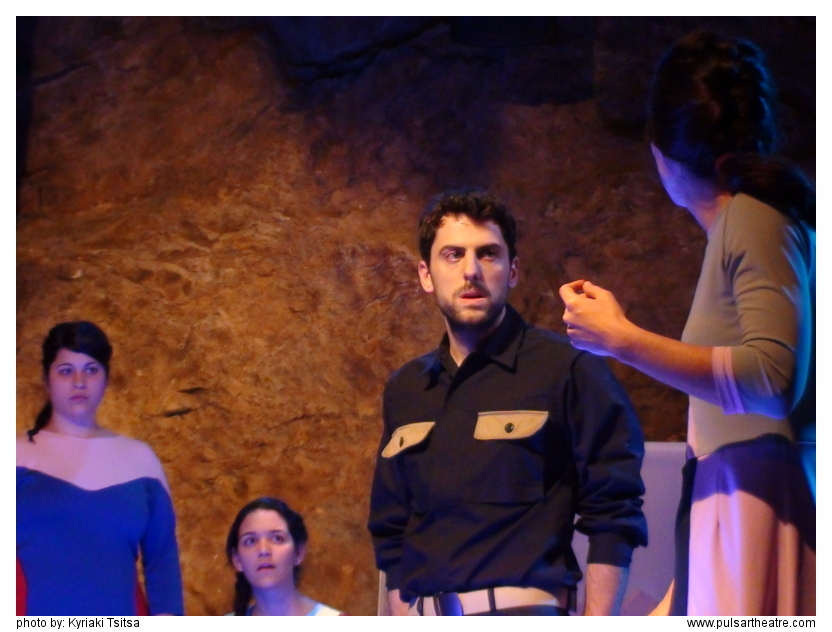
The teacher will open the box. He will read X’s innermost thoughts, he will learn about the relationship between X and Eve and he will read that X swears “Whoever touches my box, will die!”
The lock will be broken. The teacher will not be able to relock the box. But he will not confess that he was the one that opened the box. He will turn yellow, he will be ashamed. And then God will appear. The God he has denounced for years now. And thiw God will stay to keep an eye on him until the teacher tells the whole truth.
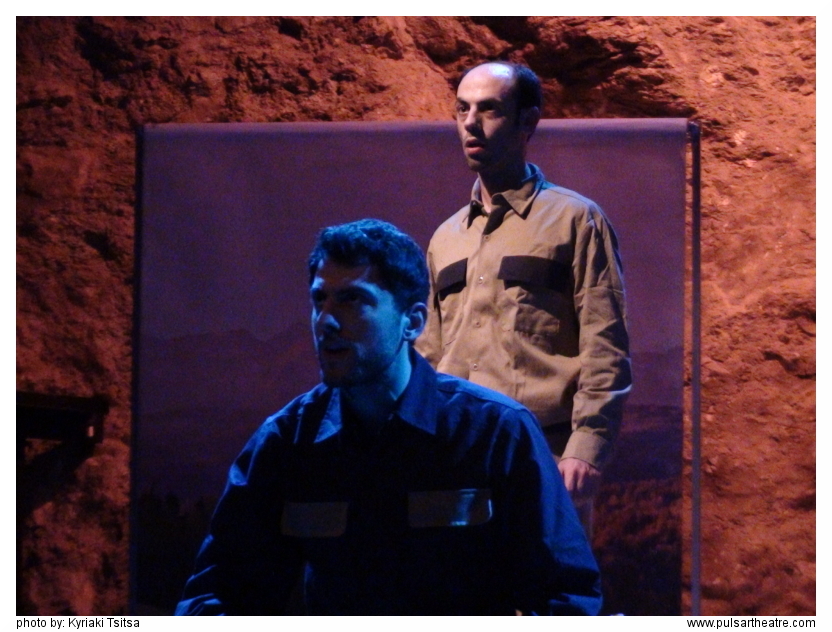
X will blame N for the broken box, N will ask the teacher to help him, N will be lost in the forest and be found dead, R will show X as guilty, X will take the responsibility for the murder. But the teacher will nit dare to tell the truth.
Months later, there will be a trial. X is the accused one. Ih the house of truth and justice, journalists,witnesses, mothers, lawyers, prosecutors and defendants will mumble ambitions, lies and selfishness. And so God will appear again. An the teacher will tell that truth of the camp. X will be acquitted, Eve will be accused for the murder, even though she is innocent and the teacher will be indicted and he will loose his job.
A little truth will be said and the bigger truth will be covered in the dim waters of the dark sea of guilt. But the big truth must be said, because “God goes through every street” and God is the truth.
The school of propaganda, the camp of death and the court of half truth belong to the same dark world of the Age of the fish, says the Horváth, as an amateur astrologer. But the teacher and some students, who managed not to become dumb fishes and still believe in “truth and justice”, will find the truth, they will find out who the real murderer is. They will tell the truth and this truth will unite people and stories and will prove that “how really things are in the world” is not the same as “how things should be”. The teacher will not go back to the school of propaganda, he will leave to become a teacher in a missionary school in Africa.
Horváth tells the story of the teacher and the story of their common period of time in their lives. At the same moment he knows that he will not go back to his Berlin but has to prepare himself for his flight in America. He wrote Youth Without God just before he started writing his new novel under the title Adieu, Europa! Probably because he had foreseen that Europe between the two wars could no longer be the house of truth.

Supported by: