
Deirdre
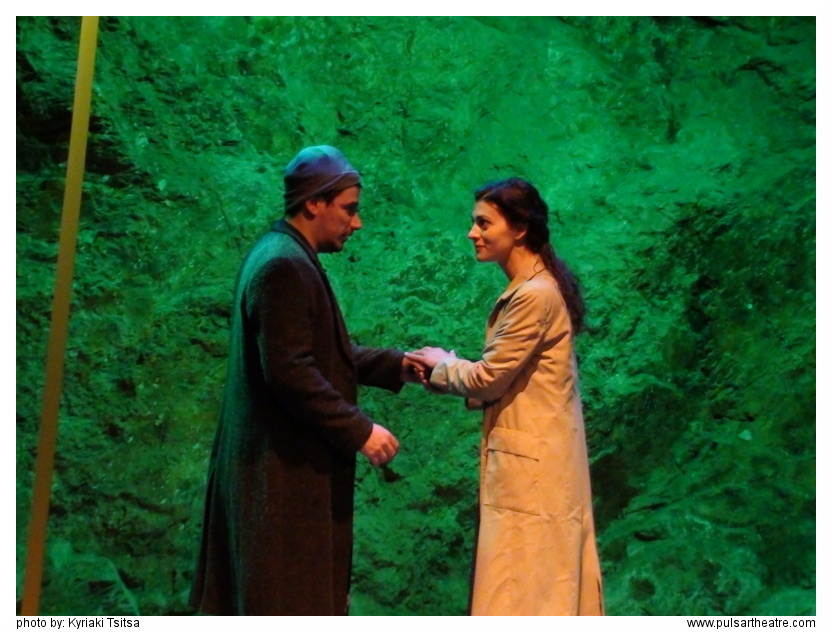
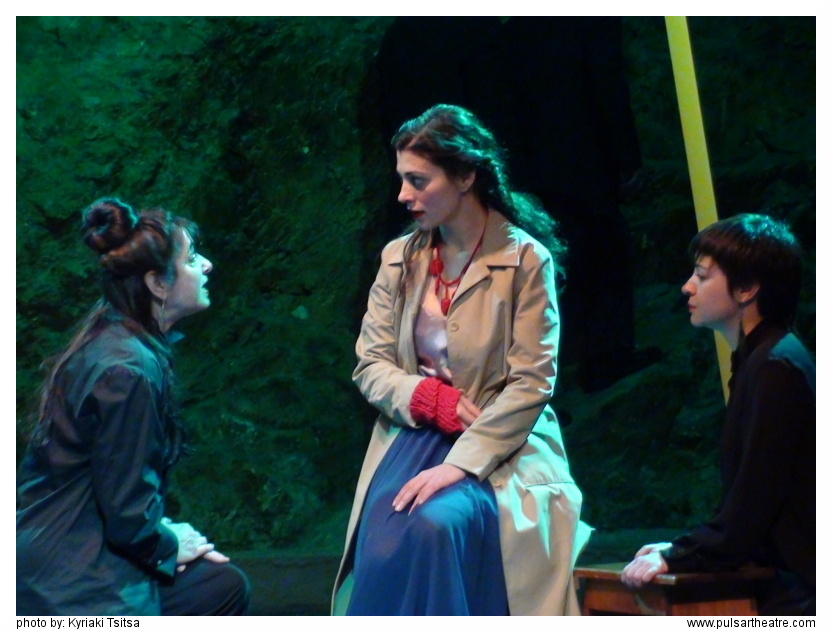
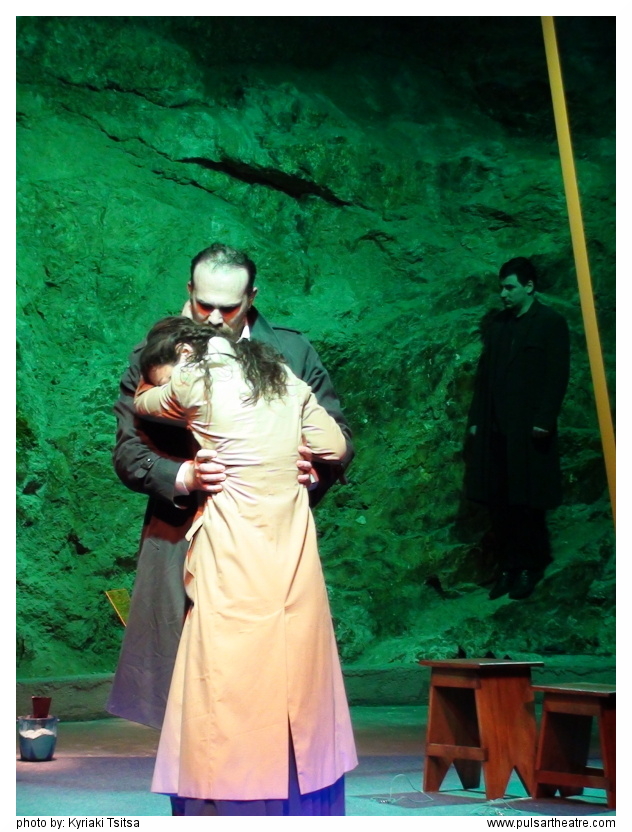
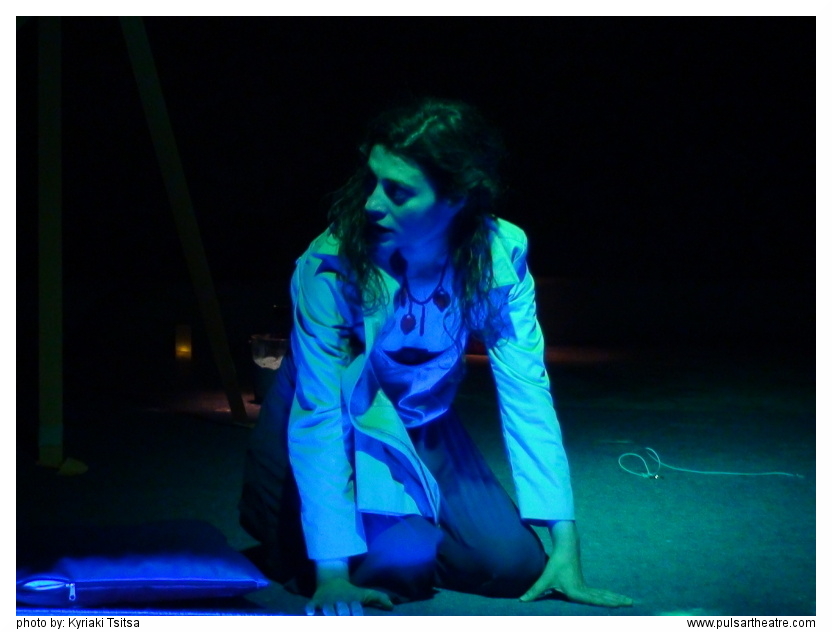
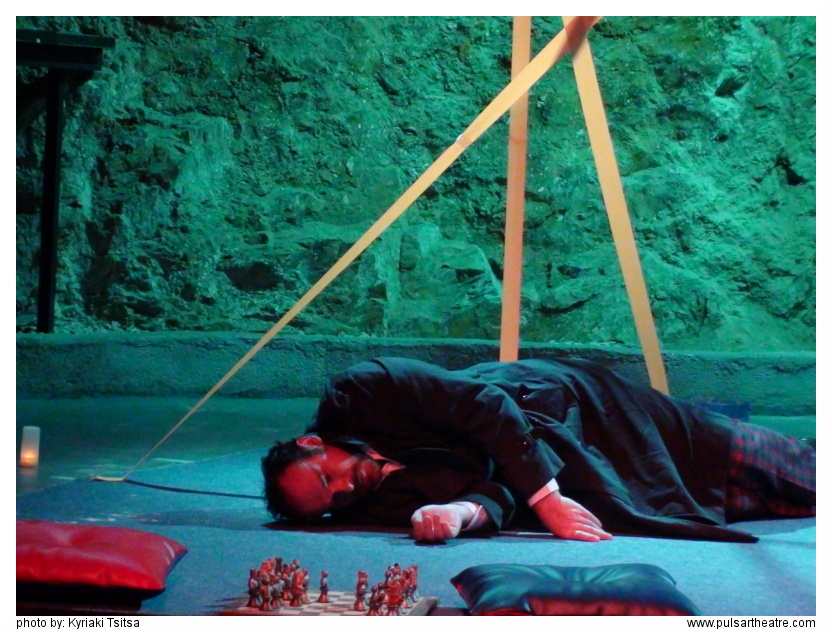
On the 150th anniversary of the birth of W.B. Yeats, his play Deirdre was presented for the first time in Greece, directed by Vicky Georgiadou, at Skrow Theater (Archelaou 5, Pagrati, Athens) from 22 April until 29 May 2015.
Translation – direction: Vicky Georgiadou
Set – costume design: Kyriaki Tsitsa
Lighting design: Melina Mascha
Music and sound design: Costas Andreou
Production: Pulsar group
Cast:
First Musician: Electra Gennata
Second Musician / A dark-faced Messenger: Dina Vidali
Fergus / Conchubar: Thanassis Dovris
Deirdre: Genovefa Zagga
Naoise: Vassilis Mavrogeorgiou
Will's journey
The prophesy was saying that Deirdre’s beauty will be the cause of a quarrel that will bring death to the kingdom of Ulster. Despite the claim to have her killed, the king saves the baby girl, hoping that she will be his wife when she “puts on womanhood”. Deirdre’s beauty will become the property of the leader and nobody will dare to oppose.
King’s will tried to go against fate.
Deirdre grew up isolated. Nobody was allowed to see her beauty. The king thought that this choice would guarantee peace. But Deirdre dreamed of love and met love in Naoise’s face. The two lovers knew that their union will set king’s power to fire and lit the fuse for the explosive fulfillment of the prophecy. They fled away and lived wandering “somewhere beyond the edges of the world.”
Their will tried to go against fate and king’s command.
Mad with rage, king Conchubar chased the lovers in order to get back the treasure his protection created: indeed, Deirdre became the “most beautiful woman of Ireland”. Fergus, senior consultant as well as King’s fool, tried to appease king’s anger. He believed “the best in every man”. He tried to convince the king to forgive, not let his rage prevail, not let the prophesy come closer.
Fergus’ will tried to go against fate and common sense.
And finally the king forgave. Fergus, triumphant, brings back to Ulster the legendary lovers in order to attend a reconciliation dinner with the king. The wanderers will live happily in peace ever after!
This is will’s adventure in fate’s tornado, until the moment Yeats decides to make the starting point of his play Deirdre. For an hour, fate and will shall have a final and mortal battle. Fate will be fulfilled, but still the freedom of will shall reach its apotheosis.
“Love is all we need”
Yeats dramatizes the final hour of the events of this emblematic Irish legend, presenting the characters in the most essential moment of their life: the moment when will’s final choice fulfills the aim of love and faith in a life of freedom, although this life of freedom comes through death.
In Yeats’ Deirdre the flame of life will eventually prevail in an icy world of power and bargain, immobility and treacherous silence.
Through the density of this final hour, Yeats proves himself to be a great master of dramatic twists and an astonishing accurate connoisseur of human soul. In this delicate, magical and terrifying hour of nightfall – the time of passing from light to darkness – everything in Yeats’ play seems to get transformed: the welcome ceremony becomes a death trap, the benevolent ambassador (Fergus) becomes a pawn in the treacherous king’s hands, the generous king becomes a cancerous combination of a possessive monster with an enamoured soul and the two trapped lovers transform themselves from caged little birds to proud free eagles. In an hour, during which a dark fate seems to reach its fulfillment, light overcomes darkness, freedom of will overcomes the fear of magic, the power of the soul overcomes the paid superiority of power and Yeats walks with firm steps on the ground of an earthy mythology in order to speak of a great moment of awareness: when the characters realize with absolute simplicity that “love is all we need”.
In Yeats’ universe, love and the flame of love in uncompromising souls of pure dignity elevate our existence and unite the little mortal human being with a universal soul that exists in us and sometimes re-lives as a cellular memory that links us, beyond social conventions, with the essence of freedom, will, dignity, completeness and dignity.
Musicians' harmony
In order to create this harmonic universe of integrity, Yeats does not use only great mythical models like Deirdre and Naoise nor only strong authoritarian figures like Conchubar and Fergus. A key element in Yeats’ Deirdre is the presence of three women, wandering musician that come “by chance” to this particular guesthouse in this fateful moment.
Three nameless mortals, whose primal characteristic feature is the practicality of survival, encounter two mythical lovers. Contrasting Fergus’ and Naoise’s initial logic and code of honor, the tree Musicians, along with Deirdre, become those who trust and follow the power of intuition. And eventually they become the only companions of the two lovers in the moment of betrayal and the only witnesses of their proud final choices.
Moreover, they become the chain bond between the legendary characters and Yeats himself. At the end of the play, these Musicians promise to the lovers to sing their story to eternity. And through the centuries, this tradition of simple people reaches Yeats and Yeats uses this tradition to disclose the myths of turbulent Ireland through his high dramatic art and to associate them with the claims of contemporary world where the freedom of will still remains – fortunately – the request of a dignified life, a life of integrity.
Vicky Georgiadou, 10/02/2015
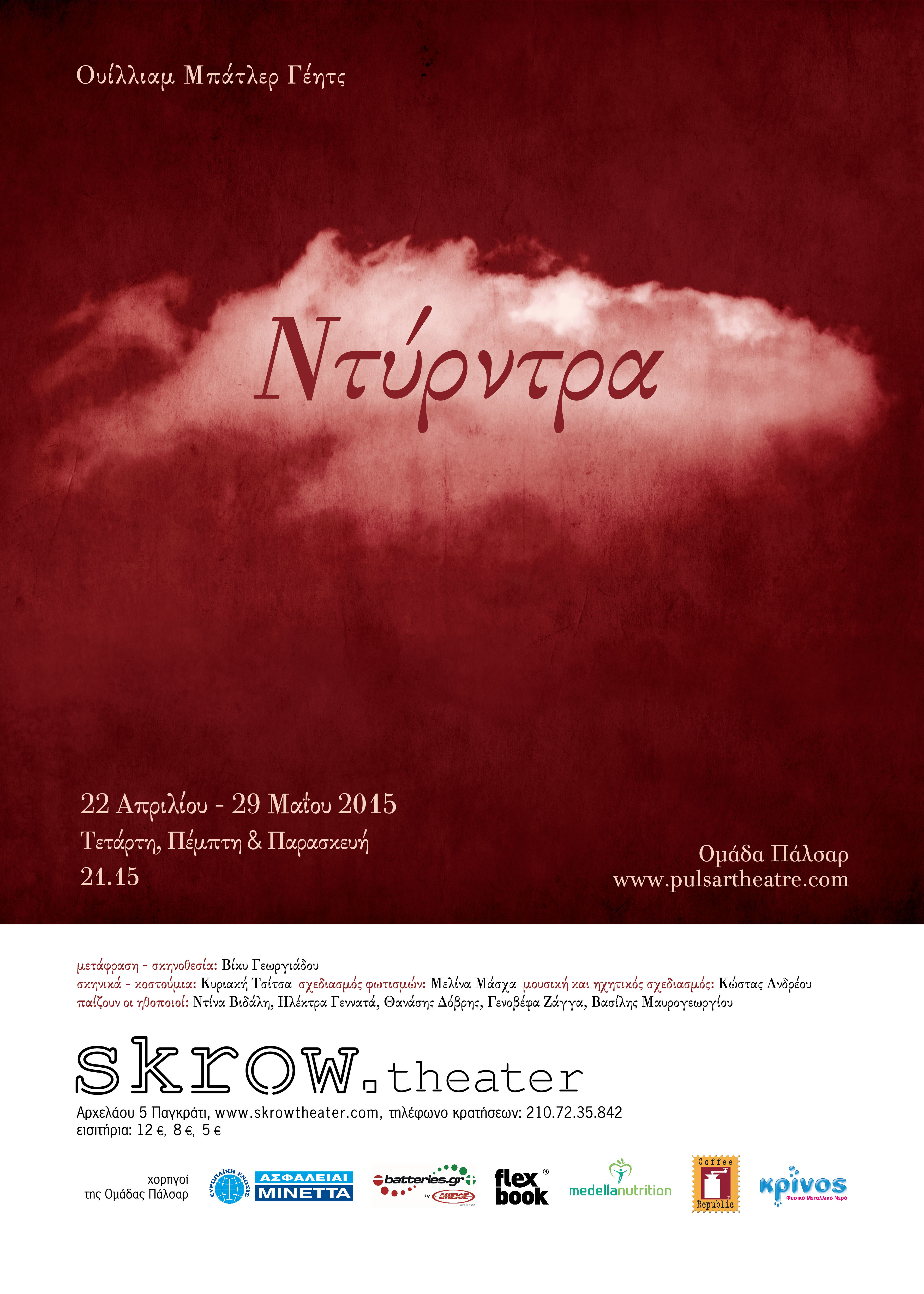
The poster
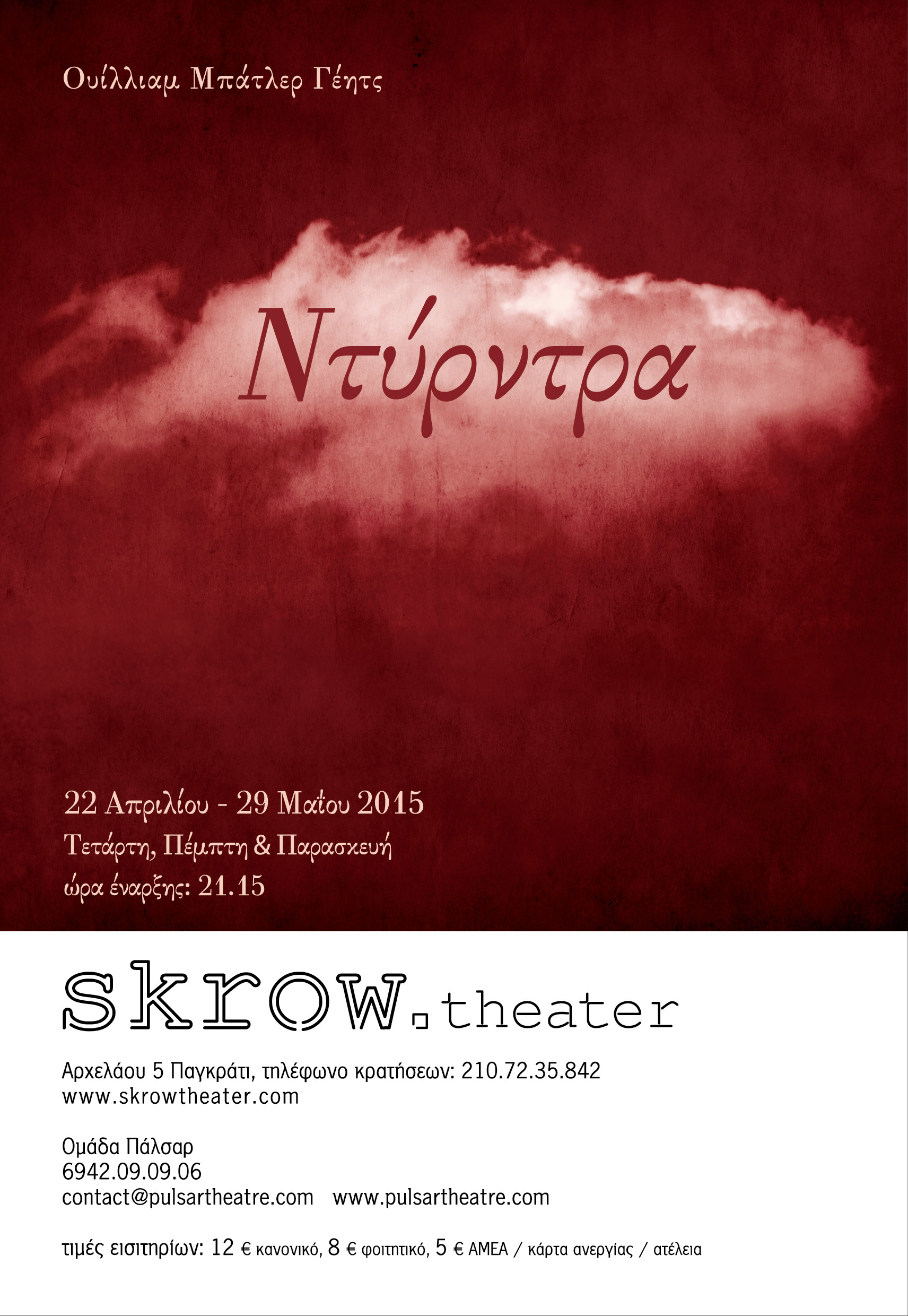
The flyer (front)
The flyer (back)
Supported by:
